
Three-Piece Cans vs. Two-Piece Cans: A Comparative Overview
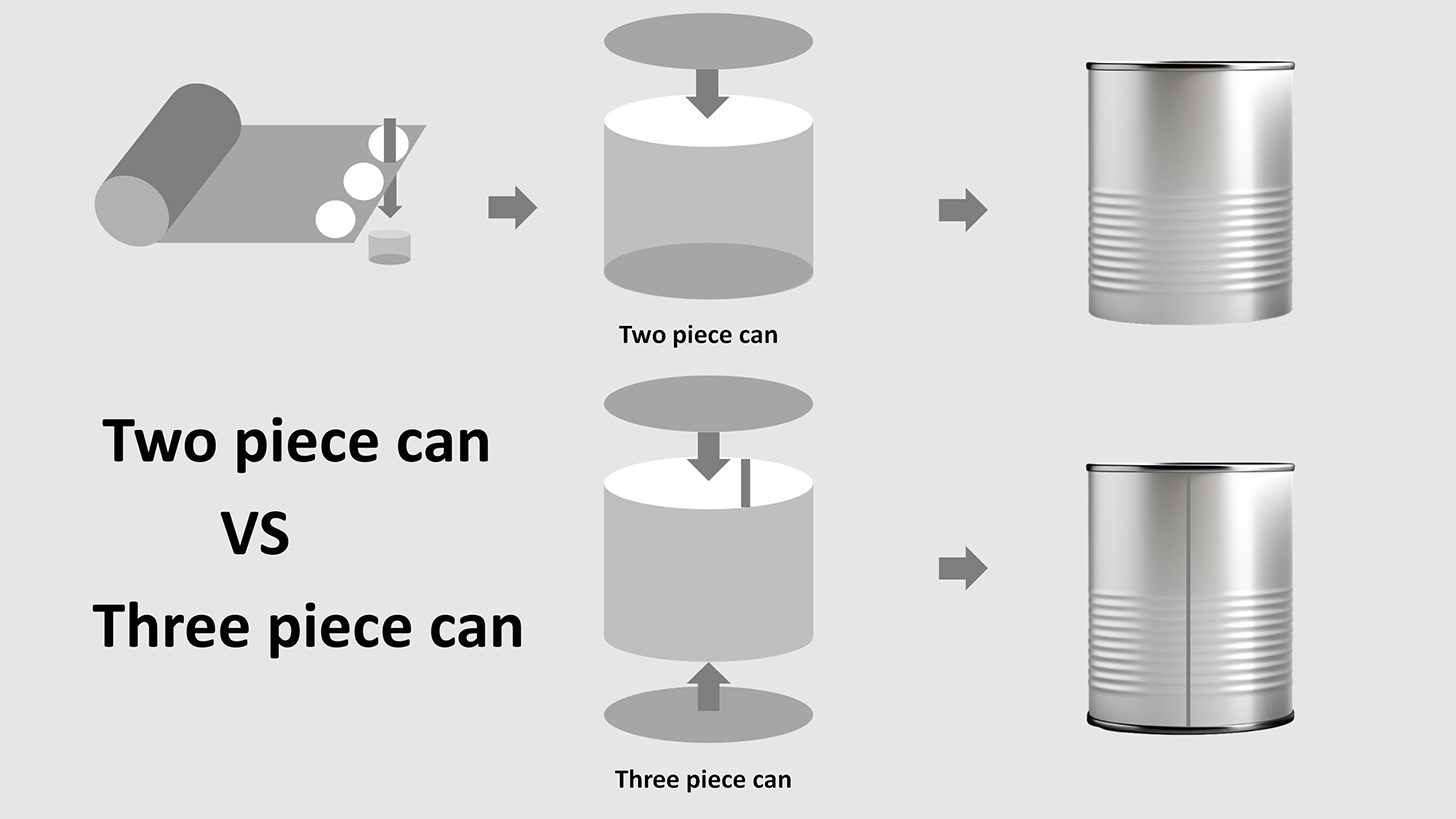
Three-Piece Cans:
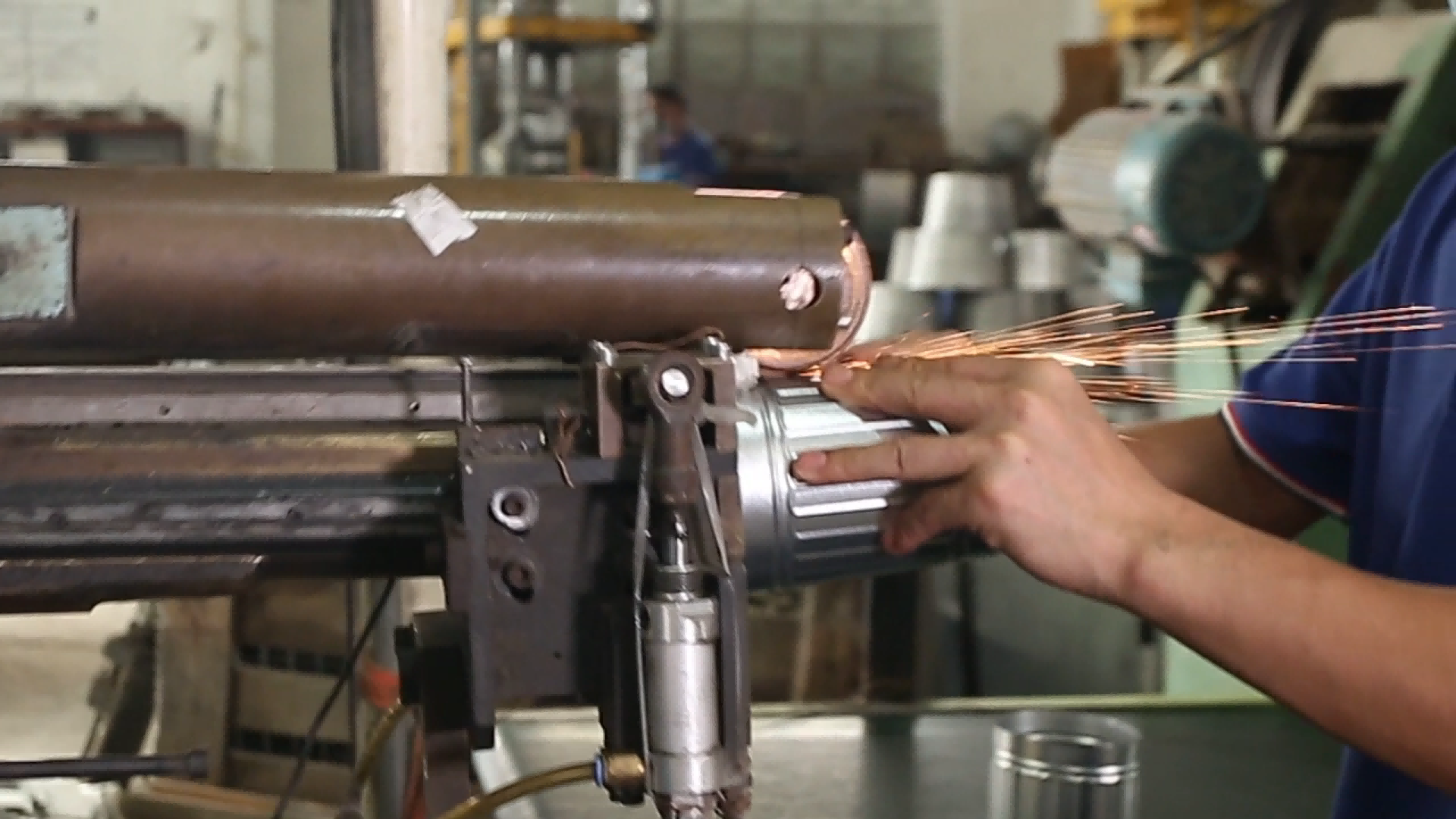
- Structure: Comprising two end lids and a cylindrical body formed from a flat metal sheet with longitudinal sides joined, allowing for an open top and bottom.
- Formation Ease: Easier to form in any combination of height and diameter, facilitating the production of mixed specification cans.
- Joining Methods: Longitudinal sides joined by either soldering or welding; however, welding is preferred in the food industry due to safety concerns related to lead migration from soldering.
- Seaming Processes: After side seaming, additional processes include necking and flanging for beverage cans, and beading and flanging for food cans.
- Necking and Beading: Necking reduces the diameter of flat ends to concave ends, offering metal usage reduction. Beading treatment gives spherical curves for extra strength during retorting of food products.
- Flanging: Creation of outward flanges for better fitting of can lids.
- Double Seaming: Can ends (lids) are mechanically attached using a double seaming process, involving the interlocking of the flange and the lid's edge.
Two-Piece Cans:

- Structure: Comprising one end (lid) and a seamless body formed from a flat metal sheet stretched to form a cylindrical cup-type structure with a closed bottom.
- Innovation: A major innovation in can making, eliminating the need for a side seam.
- Weight and Integrity: Approximately 35% lighter than three-piece cans, providing better integrity as the absence of a side seam eliminates the need for coatings or enamel usage.
- Economic and Hygienic: Economic, hygienic, and offers a larger printing area due to the absence of a side seam.
- Production Processes: Involves two major processes: drawn and wall ironed (DWI) and drawn and redrawn (DRD).
- DWI Process: Stamping, forming, and ironing processes, resulting in a structure with uniform wall thickness.
- DRD Process: Sequential stretching of the can's initial structure (shallow cups) in a multistage drawing process, providing similar wall and base thickness.
- Final Treatments: Similar to three-piece cans, including trimming, cleaning, flanging, and lidding.
Three-piece cans offer versatility in design and manufacturing processes, with considerations for safety and metal usage reduction. On the other hand, two-piece cans represent a significant innovation, being lighter, more economically viable, and offering better printing area. The choice between the two depends on specific packaging requirements and industry considerations.
A Comprehensive Guide to Choosing a Watering Can
Differences and applications of Carbon Steel, Galvanized Steel and Stainless Steel in the food industry


Related blog