Demystifying Resistance Welding: A Guide to Basic & Common Types
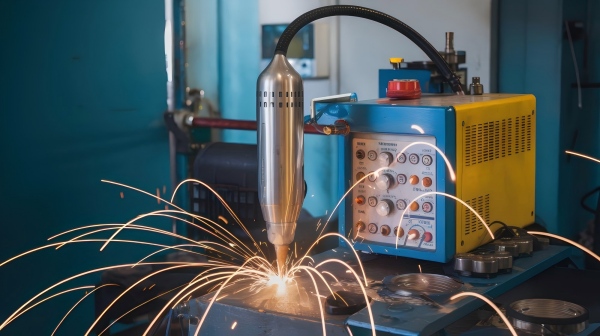
Resistance welding is a staple in manufacturing, especially for joining thin metal sheets—from automotive parts to home and garden products made of galvanized steel. What makes it stand out? It uses electrical resistance heat generated at the contact points of workpieces to melt and bond metals, without needing additional filler materials or shielding gases. This process is fast, cost-effective, and ideal for mass production, making it a favorite in many industries. In this blog, we’ll break down the four basic and most widely used types of resistance welding, explaining how each works, their key advantages, and typical applications—perfect for anyone new to welding or looking to deepen their understanding of this essential technique.
What Is Resistance Welding, Exactly?
Before diving into specific types, let’s recap the core principle. Resistance welding relies on three key elements: current, pressure, and time. When high electrical current passes through the workpieces (held together under pressure by electrodes), the resistance at the workpiece interface (and within the metals) converts electrical energy into heat. This heat quickly raises the temperature to melt the metal, forming a "weld nugget"—a solid, strong bond—once cooled. Since the heat is concentrated at the joint, the surrounding material (like the zinc coating on galvanized steel) suffers minimal damage, a huge plus for preserving product performance.
The 4 Basic Types of Resistance Welding You Need to Know
1. Spot Welding: The Most Common "Point-to-Point" Bond
Spot welding is the most recognizable type of resistance welding—and for good reason. It’s used to join two or more overlapping metal sheets by creating small, discrete welds (called "spots") at specific points.
How it works: Two cylindrical copper electrodes clamp the workpieces together. A short burst of high current flows through the electrodes, focusing heat at the contact point between the sheets. The metal melts to form a weld nugget, and the pressure is maintained as the nugget cools and solidifies. Each spot takes just 0.1–0.5 seconds to form, making it ultra-efficient.
Key advantages: Fast speed (ideal for mass production), no spatter or post-weld cleaning needed, minimal heat-affected zone (protects coatings like zinc), and simple automation.
Typical applications: Galvanized steel home products (storage baskets, mesh shelves), automotive body panels, appliances (refrigerator doors), and electronic enclosures. It’s especially great for thin sheets (0.5–3mm thick).
2. Seam Welding: For Air-Tight or Water-Tight Continuous Joints
If you need a continuous, leak-proof weld (instead of discrete spots), seam welding is the go-to choice. It’s essentially an extension of spot welding, but with rotating electrodes that create overlapping weld spots to form a seamless bond.
How it works: Instead of stationary cylindrical electrodes, seam welding uses two rotating copper wheels (electrodes) that clamp and feed the workpieces forward. Current is applied either continuously or in pulses as the wheels rotate, creating a series of overlapping weld nuggets. This forms a continuous, air-tight/water-tight seam.
Key advantages: Creates leak-proof joints, consistent weld quality, suitable for high-volume production, and works well with thin to medium-gauge metals.
Typical applications: Galvanized steel tanks (garden water tanks), metal cans, automotive fuel tanks, and HVAC ductwork. It’s perfect for products that need to hold liquids or gases.
3. Projection Welding: For Stronger Joints on Thick or Shaped Parts
Projection welding is designed for joining thicker materials or parts with irregular shapes, where spot welding might struggle to concentrate heat evenly. It uses pre-formed "projections" on one of the workpieces to focus the current and heat.
How it works: One workpiece is stamped or machined with small projections (dots, ribs, or studs). The workpieces are clamped between flat electrodes, and current is applied. The projections concentrate the current, generating intense heat at those points to melt the metal. As pressure is applied, the projections collapse, forming large, strong weld nuggets that bond the parts together.
Key advantages: Produces stronger welds than spot welding (larger nugget size), can join thick or dissimilar metals, reduces electrode wear (since current is focused on projections), and works with complex shapes.
Typical applications: Galvanized steel garden furniture (table legs, chair frames), automotive brackets, nuts and bolts welded to sheets, and heavy-duty appliances.
4. Flash Welding: For End-to-End Joining of Bars, Tubes, or Rods
Flash welding is a resistance welding type used for joining the ends of two metal parts (like bars, tubes, or rods) in a "butt joint" (end-to-end). Unlike the previous types, it uses a brief period of arcing (flash) to generate heat before forging the parts together.
How it works: The two workpieces are clamped in fixtures, with their ends facing each other. A high current is applied, and the workpieces are moved toward each other slowly. As the ends make contact, sparks (flash) are produced by the current arcing across small gaps. This flash rapidly heats the ends to a plastic state. Once the correct temperature is reached, the workpieces are pressed together with high force (forging), squeezing out any impurities and forming a solid bond.
Key advantages: Ideal for end-to-end joining, can handle large or thick parts, high welding speed, and produces strong, uniform joints.
Typical applications: Galvanized steel tubes (garden fence posts, handrails), reinforcing bars, automotive axle shafts, and tool handles.
Key Tips for Successful Resistance Welding (Especially for Galvanized Steel)
While resistance welding is straightforward, a few tips will ensure consistent, high-quality welds—especially when working with galvanized steel (a common material in home and garden products):
- Use the right electrodes: For galvanized steel, choose chromium-zirconium copper electrodes. They’re wear-resistant and prevent zinc from sticking to the electrodes (which can ruin weld quality).
- Control pressure and current: Too much pressure can deform thin sheets; too little causes spatter. Adjust current based on material thickness—thicker sheets need more current, but avoid overheating (which damages the zinc coating).
- Keep electrodes clean: Dirty or worn electrodes reduce current flow and heat distribution. Clean them regularly with a wire brush or electrode dresser.
- Check workpiece alignment: Misaligned parts lead to weak, uneven welds. Ensure workpieces are flat and properly clamped before welding.
Wrapping Up: Choose the Right Resistance Welding Type for Your Needs
Resistance welding’s speed, efficiency, and versatility make it indispensable in manufacturing—but the key is choosing the right type for your project:
- Use spot welding for thin sheets and mass-produced small parts (e.g., storage baskets).
- Use seam welding for leak-proof joints (e.g., water tanks).
- Use projection welding for thicker, irregular parts (e.g., garden furniture frames).
- Use flash welding for end-to-end joining (e.g., fence posts).
Whether you’re a manufacturer, a hobbyist, or just curious about how your favorite metal products are made, understanding these basic resistance welding types helps you appreciate the precision behind strong, durable metal joints. If you’re working with galvanized steel (a material that pairs perfectly with resistance welding), following the tips above will help you achieve consistent, high-quality results every time.
Water transfer printing:How Does It Work?
A Complete Guide to Galvanized Steel Welding Processes: Mainstream Technologies & Key Practices