Do Bread Bins Work? A Food Science Perspective on Bread Staling and Storage
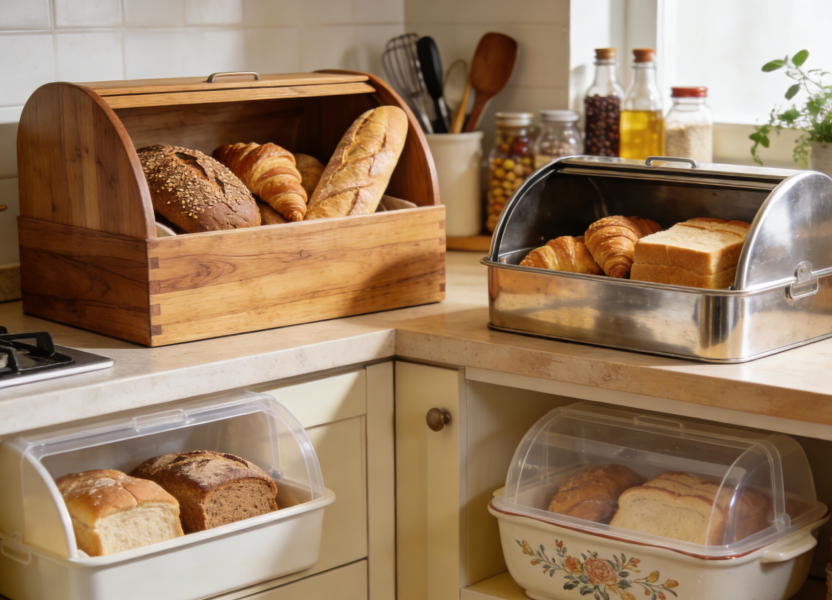
As someone who’s spent over two decades researching kitchen storage solutions, I’m often asked: “I bought a bread bin, but my bread still went stale in two days—is it just a gimmick?”
This question touches on one of the most misunderstood phenomena in everyday food science. The truth is, bread bins aren’t magic—but when designed correctly, they do work.
To understand why, we need to look beyond folklore and examine what actually happens when bread “goes bad.”
The Real Culprit Behind Stale Bread Isn’t Dryness—It’s Starch
Most people assume bread hardens because it “dries out,” so they seal it tightly in plastic bags. But here’s the surprise: staling (or “retrogradation”) is primarily a structural change in starch molecules, not moisture loss.
After baking, as bread cools to room temperature, its amylose and amylopectin chains begin to reorganize and crystallize. This process makes the crumb firm and dry-feeling—even if the actual water content hasn’t dropped significantly. Paradoxically, this staling accelerates in very dry environments, while moderate humidity can slow it down.
However, too much moisture invites mold. So the ideal storage solution must strike a delicate balance: slow staling without encouraging microbial growth.
A Bread Bin’s True Role: Creating a Microclimate Buffer
Viewed through this lens, a bread bin isn’t about “keeping air out.” It’s about stabilizing the immediate environment around the loaf—shielding it from kitchen fluctuations in temperature, airflow, and humidity.
An effective bread bin typically offers three things:
- Partial enclosure to reduce rapid moisture exchange;
- Controlled ventilation to prevent condensation buildup;
- Non-absorbent interior surfaces to avoid localized damp spots.
This explains why paper bags work short-term (they breathe), plastic bags often backfire (they trap steam), and well-engineered bins can extend freshness by 3–5 days.
How Material Choice Shapes Performance
Not all bread bins perform equally. The material fundamentally influences microclimate control:
- Plastic bins: seal tightly but rarely ventilate. Trapped vapor condenses on cooler surfaces, creating ideal conditions for mold—especially in humid climates.
- Wooden bins: offer natural breathability, but wood absorbs and releases moisture with ambient changes. Over time, this can lead to inconsistent internal humidity. Plus, crevices harbor crumbs and microbes, posing hygiene challenges.
- Metal bins (particularly galvanized steel): provide a non-porous, inert surface that neither absorbs water nor odors. When paired with thoughtful venting, they maintain stable humidity without promoting condensation—making them among the most reliable options for consistent performance.Its advantage lies in offering a predictable, cleanable physical environment that supports optimal storage conditions.

Design Details That Make or Break Functionality
Even with the right material, poor design undermines effectiveness:
- Lid fit matters: A lid should sit snugly but not hermetically seal. The best designs allow subtle air exchange—enough to prevent condensation, not enough to dry out the loaf.
- Interior geometry counts: Rounded corners minimize crumb traps and simplify cleaning, reducing bacterial hotspots.
- Size alignment is key: Oversized bins increase dead air volume, diluting the loaf’s natural moisture and weakening humidity buffering.
These engineering nuances separate decorative objects from genuinely functional tools.
Final Thought
A bread bin won’t stop staling—it only slows it. For maximum freshness, buying smaller loaves or freezing slices remains the gold standard.
But for households and retailers seeking practical, waste-reducing solutions, a scientifically informed bread bin delivers real value.
This is why JASION — with over 30 years of experience in metal home goods manufacturing — has always focused on material science and user needs. Having observed global lifestyle brands’ growing demand for professional storage solutions, we’ve leveraged our expertise to develop galvanized steel bread bins integrating food-safe coatings, precision ventilation, and modular designs.
Every product passes strict testing, holding ISO, BSCI, and SEDEX certifications, with materials and craftsmanship aligned to scientific storage principles.

If you’re sourcing suppliers for private-label or co-branded kitchen lines, JASION’s strengths stand out: we master both metal properties and bread storage food science, delivering market-fit products and flexible cooperation plans. We’re eager to partner with quality-focused, professional brands like yours to bring premium bread bins (balancing engineering innovation and traditional needs) to more consumers.
Please browse more case studies on our website or contact us directly for a tailored timeline and quote analysis for your product line.
We look forward to your inquiry and exploring win-win cooperation together!
Kitchen Organization 101: Transform Your Kitchen with Smart Storage Solutions
Recycle Your Kitchen Scraps & Food Waste
Related blog