How to Store Pet Food? - Choose a Airtight Storage Container
Abstract
1. Understanding the composition of pet food and its properties
- Analyse the composition of pet food, including the main ingredients and additives.
- Explore how the properties of different ingredients affect storage.
- Analyse the composition of pet food, including the main ingredients and additives.
- Explore how the properties of different ingredients affect storage.
2. Choose appropriate storage containers and materials
- Describe the storage methods for wet and dry pet food separately.
- Compare and contrast storage containers made of different materials, e.g. plastic, metal and glass.
- Describe the storage methods for wet and dry pet food separately.
- Compare and contrast storage containers made of different materials, e.g. plastic, metal and glass.
3. Critical factors in controlling the storage environment
- Discusses the effects of temperature, humidity, oxygen and light on pet food storage.
- Discusses the effects of temperature, humidity, oxygen and light on pet food storage.
4. Storage Management and Maintenance
- Provides practical tips on storage management, such as cleaning containers regularly and avoiding cross-contamination.
5. Periodic inspection and quality control
- Emphasises the importance of regular inspection of pet food, including appearance, odour and nutritional content.
- Emphasises the importance of regular inspection of pet food, including appearance, odour and nutritional content.
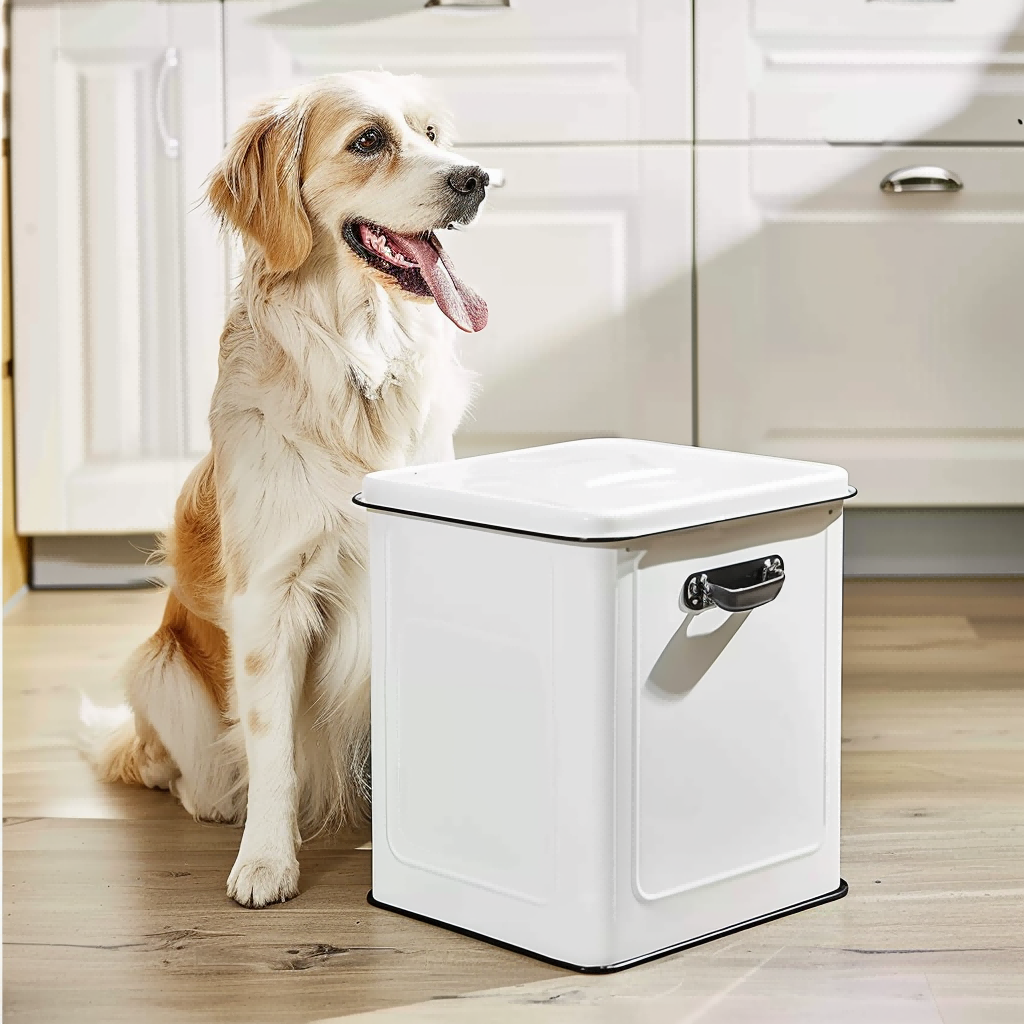
Pet food is the cornerstone of your pet's health and well-being, and proper storage practices can ensure that the quality and nutrition of your pet food is not compromised. However, to achieve optimal storage, you need to have an in-depth understanding of the properties of pet food ingredients, the choice of storage containers and the management of the storage environment. Additionally storing pet food correctly can prevent your pet from over-eating and becoming obese or eating food given to other pets and experiencing some vomiting and diarrhoea.
Understanding the ingredients of pet food and their characteristics:
The ingredients of pet food include the main ingredients and various additives such as proteins, carbohydrates, vitamins and minerals. These ingredients have different properties and affect storage in different ways. For example, grains with a high fat content are more prone to oxidative deterioration, while those with a high water content are more susceptible to contamination by moulds and bacteria.
Choose appropriate storage containers and materials:
Pet food can easily become unfresh and contaminated after opening. Please keep wet pet food sealed in the refrigerator after opening if it is not to be eaten all at once. If you cannot finish it in a short period of time, please divide the bag of food into several portions and freeze them, and thaw them one by one when you need them.
While dry pet food is easier to store at room temperature, a well-sealed container will help prolong the fresh taste. What's more a sturdy airtight container will help keep out some insects as well as your food-loving pets. It is recommended that you get an airtight container that is the size of the bag of dog food you often buy for storage. This is because you can then put the entire bag of pet food directly into the container without removing the bag. The benefit of keeping the bag is that it retains product information and traceability information, helping you to be able to trace back if something goes wrong with your pet. Additionally, the bags are a layer of protection for the pet food; these packages are inherently airtight, and all you need to do is seal the opening of the bag. If you don't intend to keep the bags, don't forget to take photos of the manufacturing information before throwing them away and write important information such as the shelf life on a sticky note and stick it on the front of the container, which will allow you to better manage your pet food.
Different materials of storage containers can have different effects on the preservation of pet food. Plastic containers are usually lightweight and easy to clean, but have a poor barrier to oxygen and moisture; metal containers have better sealing and durability, but metal ion contamination may occur; glass containers have a good barrier to light, but are fragile. Therefore, when choosing storage containers, it is necessary to consider the characteristics of the material and the special requirements of pet food.
Critical factors for controlling the storage environment:
The temperature, humidity, oxygen and light of the storage environment have a direct impact on the storage quality of pet food. Ideal storage temperatures are generally between 10°C and 25°C, humidity should be controlled between 10% and 15%, and exposure to oxygen and light needs to be minimised.
Storage management and maintenance:
Apart from choosing suitable storage containers and controlling the storage environment, storage management and maintenance are also key to ensuring the quality of pet food. Regular cleaning of containers, avoiding cross-contamination, and preventing the growth of pests and moulds are all important management measures. This is done by washing the container with hot soapy water and rinsing the soap completely before you change a new dog food in each time. After washing, please wait for the container to dry completely before putting the new pet food in.
Periodic inspection and quality control:
Regular inspection of the appearance, odour and nutritional content of pet food is an effective way to ensure the quality of pet food. If any abnormality is found, prompt measures should be taken, including changing the storage container, adjusting the storage environment or replacing the food.
How to Store Loose Leaf Tea? - 7 Kind of Tea
How to manage your washing detergent?
Related blog