Mastering the Art of Flower Arrangement: Step-by-Step Guide
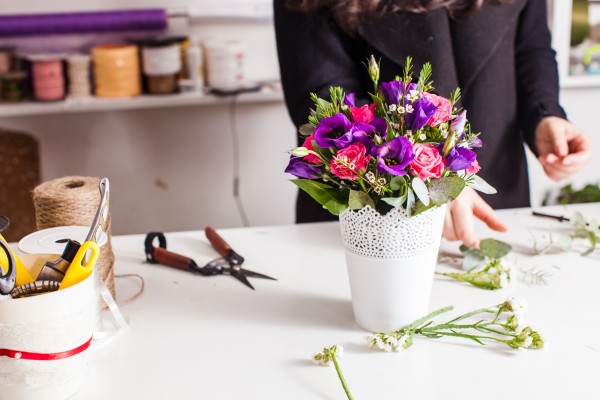
Flower arranging is a practice that focuses on skill and artistry, and having a good grasp of the selection of materials, the production process, and the precautions to be taken can help you create beautiful and meaningful pieces. Below is a detailed step-by-step demonstration of flower arranging, from selecting materials to making them to coping strategies for common problems, to help you successfully complete a flower arrangement.
1. Selection of materials and conception: selecting materials according to season or theme
Selection of materials is the first step in flower arranging, and it is also the basis for deciding the style and theme of the work. Choosing suitable flowers and containers according to the season, occasion or theme can make your work more personalized and meaningful.
Selecting flowers by season
Selection by Theme
Matching Flower Materials and Containers
2. Production process: step-by-step explanation of the production of a flower arrangement
The following is a demonstration of how to make a flower arrangement with the theme “Spring Freshness”, using spring tulips, eustoma, and eucalyptus leaves as the main materials to express a natural, light spring atmosphere.
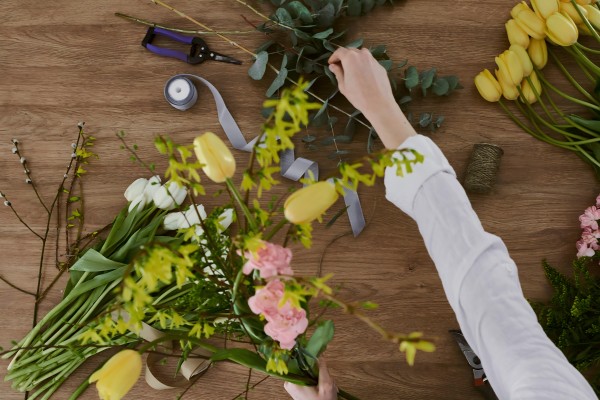
Step 1: Prepare tools and materials
- Flowers: tulips (main flowers), eustoma (secondary flowers), eucalyptus leaves (filler)
- Container: clear glass vase
- Tools: flower scissors, leaf stripper, flower clay (if using flower clay to fix)
Step 2: Trim the flowers
- Clean the bottom leaves of each floral material to avoid rotting when submerged in water.
- Cut the flower stems at a 45-degree diagonal angle, which increases the water absorption area and prevents air from entering the stems, ensuring that the flowers will absorb water for a long time.
- The length of the trimmed flower material should be slightly higher than the height of the vase to ensure that it maintains a good proportion when inserted.
Step 3: Building the skeleton
- Start by inserting eucalyptus leaves into the vase as a skeleton for the overall piece. The soft lines and natural drape of the eucalyptus leaves will bring fluidity to the piece.
- Eucalyptus leaves do not need to be inserted in too regular a direction; keep them in a natural scattered position. They can cover the edges of the container opening, creating a natural base layer.
Step 4: Insert the main floral arrangement
- Insert tulips as the main floral material. The color and shape of the tulips are the visual focal point of the piece, insert them at a slight angle to create a staggered layer of height.
- When inserting ·, take care to allow each tulip to show a different stance and avoid being too symmetrical. Some of the flowers can be slightly bent to enhance the naturalness of the work.
Step 5: Add secondary flowers
- Next, insert the eustoma as a secondary flower. Eustoma flowers are small enough to fill in the gaps between the tulips and enrich the visual hierarchy.
- The secondary flowers don't need to be equal to the main flowers; a small amount of accent is sufficient. Make sure their colors and shapes add to the overall piece without overpowering it.
Step 6: Adjustments and Finishing Touches
- After completing the insertion, slightly adjust the position of the flowers to ensure that each branch shows the best angle.
- Look at the piece from different angles to make sure that no matter which way you look at it, you can feel the beauty of balance and harmony.
- If needed, use small scissors to trim some of the leaves or flowers to ensure the piece is clean and tidy.
Step 7: Finish and display
- Finally, place the work in a suitable display location. You can choose a place with plenty of natural light to ensure that the colors and shapes of your work are perfectly displayed.
3. Attention: Frequently Asked Questions and Response Strategies
During the actual practice of flower arranging, you may encounter some common problems. Here are a few strategies for dealing with common problems:
Problem 1: Flowers wilt too quickly
Always make sure the scissors are sharp before trimming the flower stems and cutting underwater. Change the water in the vase regularly to keep the water clean. You can also place your flower arrangement in a cool environment, avoiding too much direct sunlight or proximity to heat sources.
Problem 2: Imbalanced composition
Composition should follow the principle of “staggered heights, front and back”. Place high flowers in the center or back of the work, and low flowers in front or at the edges. Observe the overall effect of the work at all times and adjust the balance by adding or subtracting flowers if necessary.
Problem 3: Flowers are unstable in containers
If the flowers tend to tip over or come loose in the container, use flower clay to hold them in place. Soak the flower clay in water and place it at the bottom of the container to stabilize the flowers when they are inserted. If you are using transparent containers, avoid using flower clay and insert the flowers in a staggered manner to form a natural support structure.
Problem 4: Color coordination is not coordinated
When choosing flowers, you should consider color matching in advance and follow color theory, such as using adjacent or contrasting colors to enhance the harmony of the work. Avoid using too many colors, so as not to make the work look cluttered. If necessary, you can replace floral materials that are too jumpy in color with more muted or uniform tones.
Conclusion
Practical flower arrangement combines skill, creativity, and problem-solving to create aesthetically pleasing and meaningful displays. From selecting materials based on season or theme to following a detailed production process, mastering the steps of floral arrangement allows for the creation of balanced, harmonious works. Attention to common issues—such as wilting flowers, imbalanced composition, and unstable arrangements—ensures the longevity and visual appeal of the arrangement. By focusing on thoughtful material choices, careful composition, and proper care, floral art can enhance any space with its beauty and emotional resonance.
The Art of Flower Arrangement: Enhancing Home, Celebrations, and Healing the Soul
Flower Arrangement Basics: Essential Tips for Materials, Vessels, and Color Matching