How to Recycle Your Kitchen Food Waste with a Compost Bin
1. Why recycle your kitchen food waste for composting
Your kitchen food waste is centrally transported to the landfill with the garbage hauler. Food waste takes up 30% of the landfill, and this food waste contains a lot of water, and the government may need to spend more energy to burn them, which is not an economical way to dispose of them. In addition, food waste rots in landfills and releases methane, a greenhouse gas that contributes to global warming. So recycling your food waste is not only an economical act but also contributes to the prevention of global warming.

For your garden, composting also makes for a good soil amendment. Through aerobic decomposition, organic materials are converted into nutrient-rich substances that help improve soil structure and the pH balance in the soil. Using more compost can also help you reduce your inputs and reliance on chemical fertilizers, making your garden healthier. In addition, you can also enjoy the composting process with your children and guide them to learn to care for the environment.
2. What food can be composted
The first thing you need to be concerned about is that the compost bin is not your garbage bin, so please don't put in any packaging or unrelated garbage. Here are some common types of food waste that can be composted:
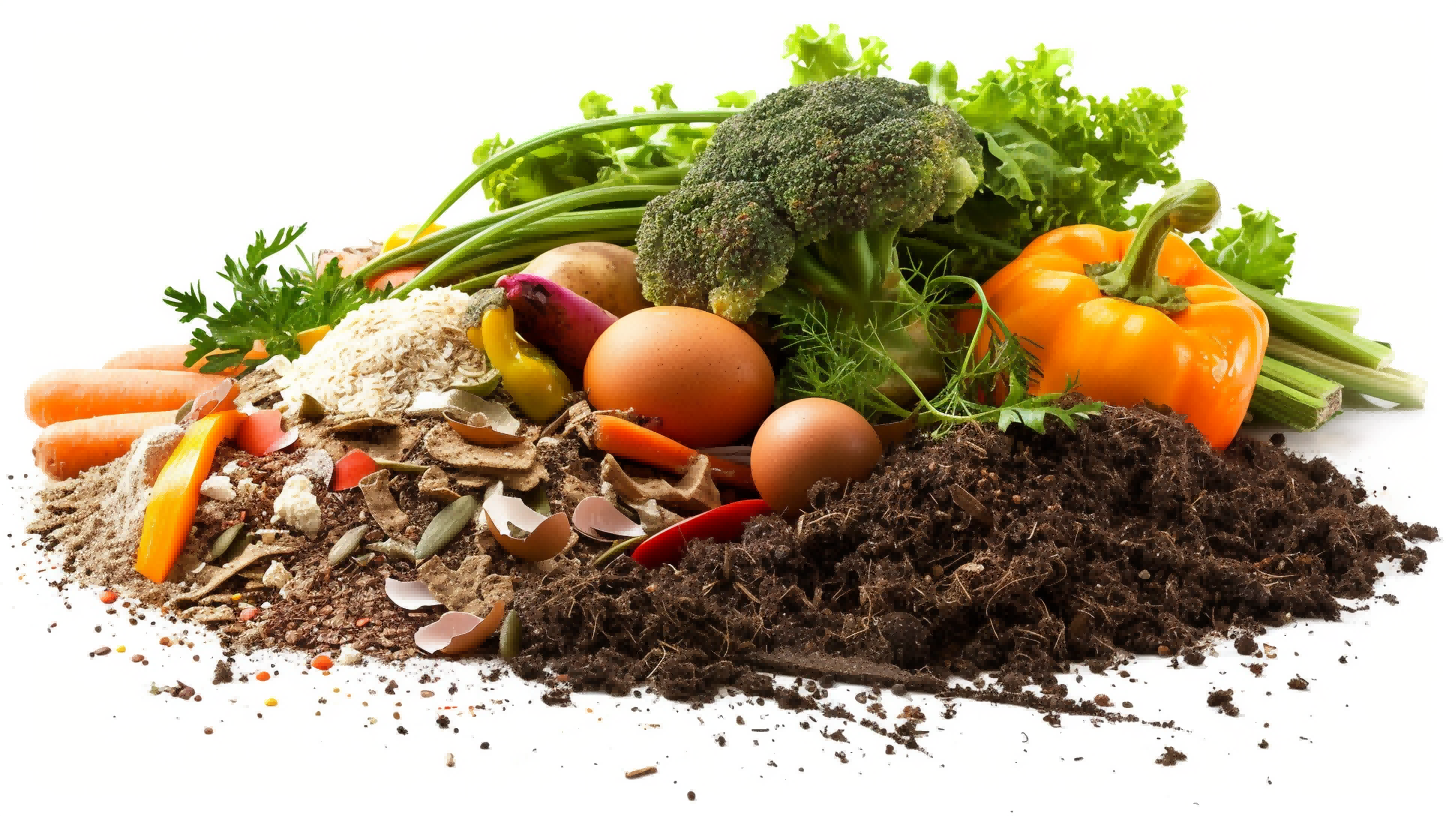
- Fruit and vegetable scraps: including peels, cores, pulp, leaves, stems, etc. from fruits and vegetables.
- Cereals: such as rice, breadcrumbs, flour, and cereal crumbs.
- Coffee grounds: Coffee grounds are a good quality composting material that can increase the organic matter content of the soil.
- Tea residue: Tea residue is rich in nitrogen and is an excellent additive to compost.
- Eggshells: Eggshells are rich in calcium and can be used as a composting material after proper treatment.
- Food waste: Includes scraps and leftovers from ingredients and waste from expired and spoiled ingredients.
- Plant Straw: Includes floral cuttings, yard trimmings and dead plant leaves.
Overall, any organic waste from plant-based ingredients or raw materials can be used for composting. However, food waste containing large amounts of fat, meat or dairy products should be avoided in the compost bin as much as possible, as these materials may cause odors or attract pests, and they do not decompose easily.
3. How to compost
By following the steps below, you can effectively recycle your kitchen food waste with a compost bin, contributing to environmental sustainability and enriching your garden soil at the same time.

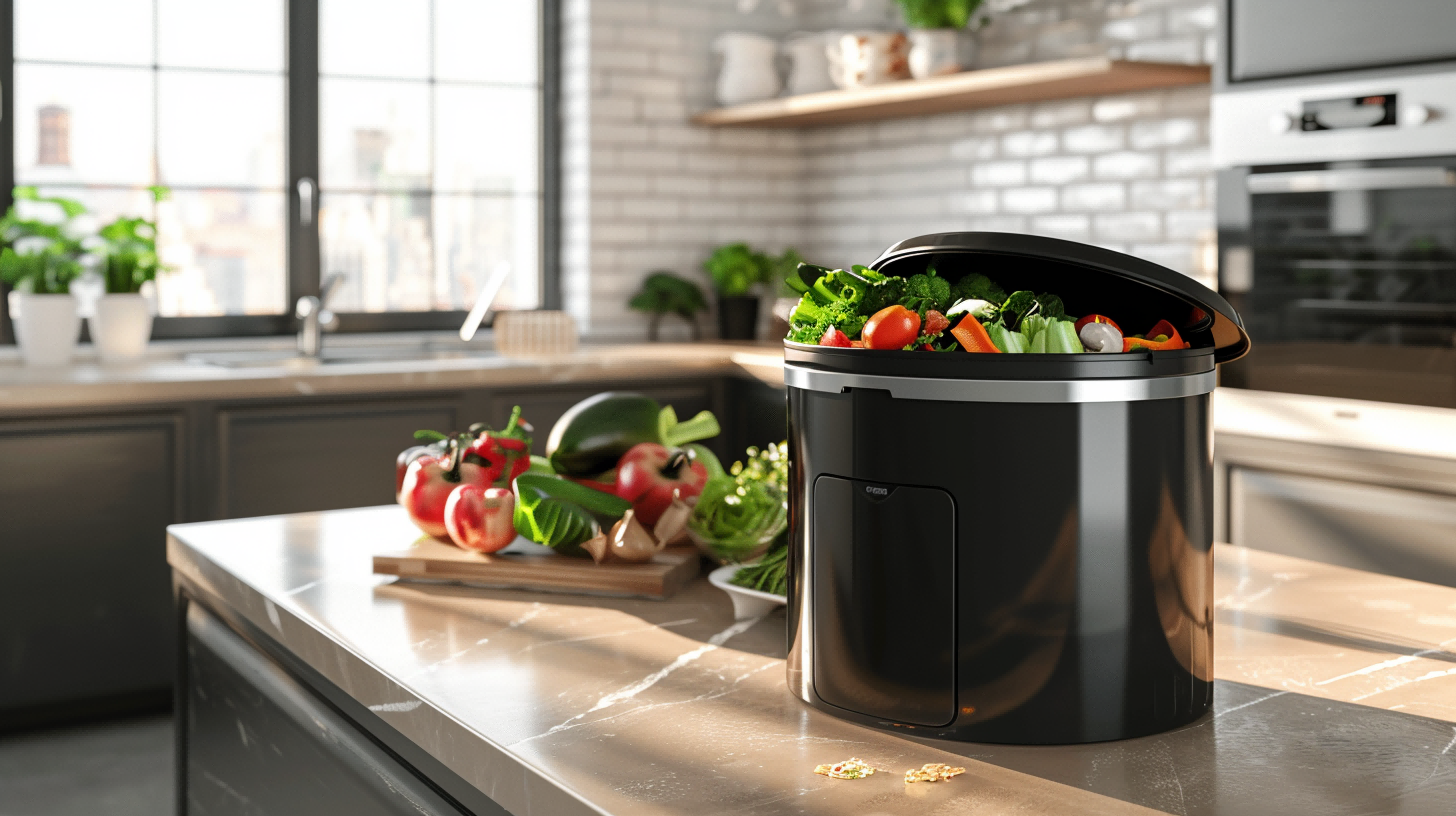
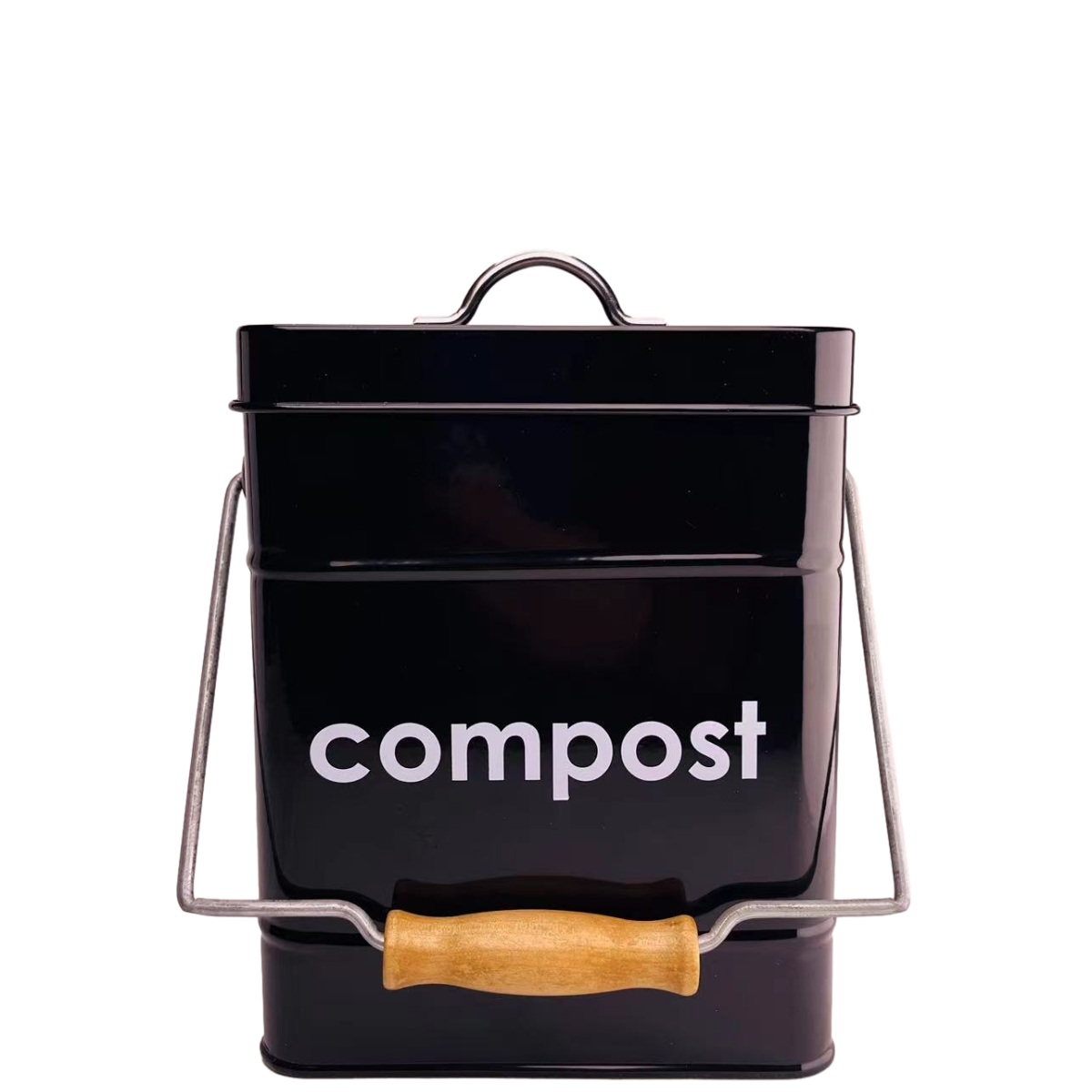
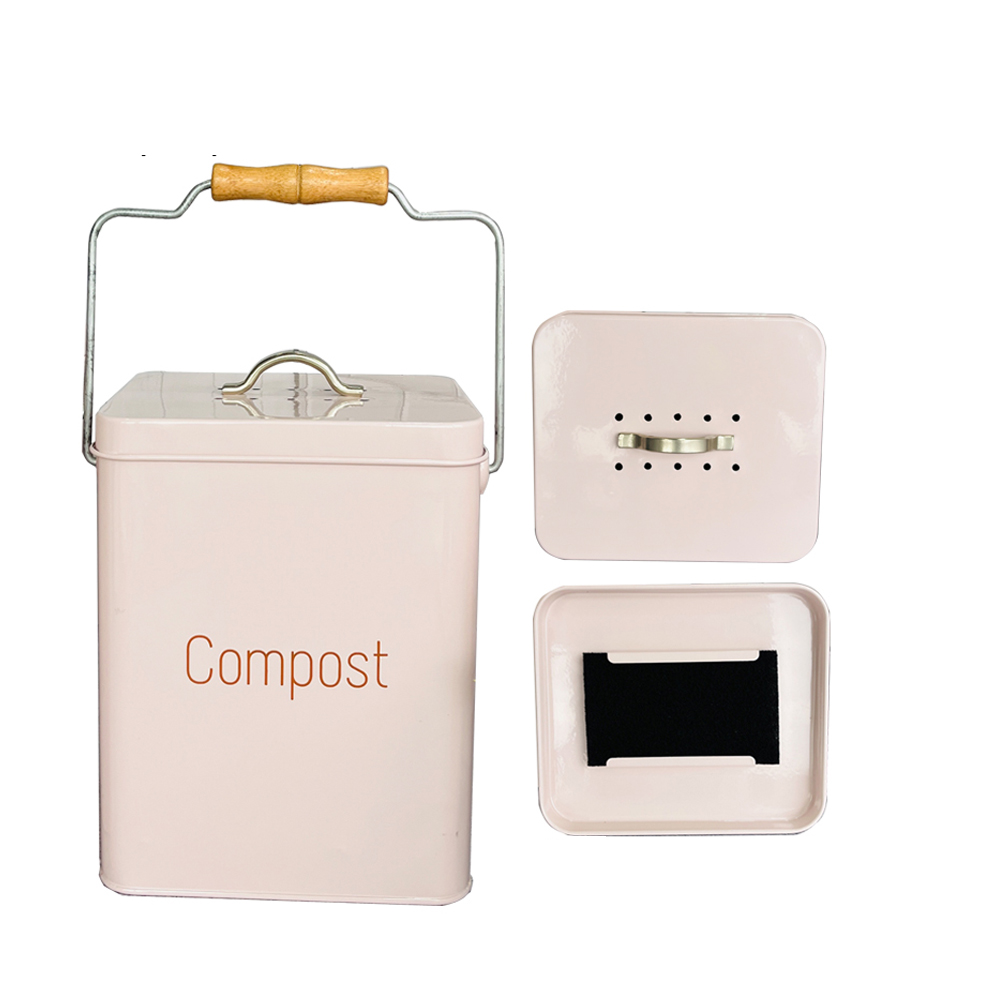
- Choose a compost container: Choose an appropriate size compost container, such as a compost bin or compost box. This container should have air holes to ensure adequate air circulation during the composting process.
- Add a bedding layer: Add a layer of coarse material like branches, hay or leaves to the bottom of the compost container to promote air circulation and prevent the waste at the bottom from getting too wet.
- Compost Organic Waste: Place kitchen food waste and other compostable organic materials, such as fruit and vegetable scraps, coffee grounds, tea grounds, and eggshells, in the compost container. Try to maintain an even distribution of organic waste and avoid large clumps.
- Control moisture and ventilation: Keep the moisture level of the compost heap moderate, avoiding over-wetting or drying. Turn the compost pile regularly to promote aeration and decomposition.
- Add Carbon Sources: Adding carbon sources (e.g., dead leaves, wood chips, paper, etc.) to the compost pile during the composting process can help to balance the carbon to nitrogen ratio of the compost pile and facilitate the decomposition of organic wastes.
- Wait for fermentation: Allow the compost pile to ferment naturally in a warm, well-ventilated environment. Typically, the composting process can take anywhere from a few months to a year, depending on the type of material being composted and the management of the compost pile.
- Maintaining management: Continuously manage the compost pile by regularly turning the compost material and controlling the humidity and ventilation of the pile to ensure that the organic waste can be effectively decomposed into fertilizer.
- Harvest Organic Fertilizer: Organic fertilizer can be harvested when the composted material has completely decomposed into a dark brown, soil-like substance. Use organic fertilizer in your home garden, planters or planting beds to provide nutrients for plants and promote growth.
How to Preserve Coffee Beans Properly?
Salt Spray Testing - Principles, Methods and Standards



Related blog